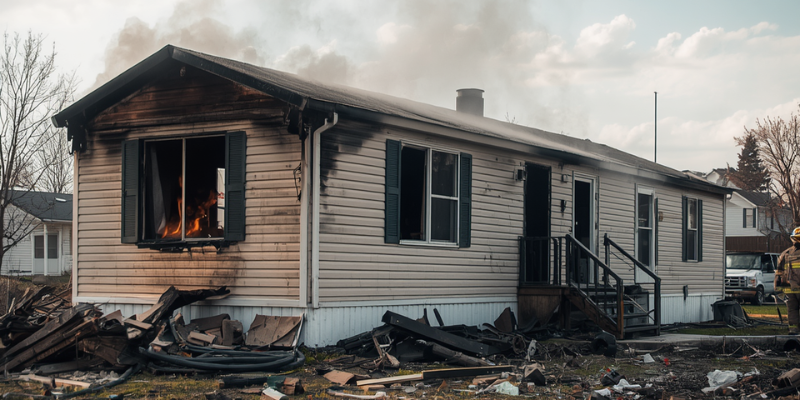
House fires claim more Texas mobile homes every year than major floods do. You won’t see that statistic making headlines, but fire damage insurance claims in Texas topped $1.09 billion in 2025, with mobile home properties from El Paso to Beaumont making up a significant chunk of that number.
Selling a fire-damaged mobile home in Texas gets complicated fast. Insurance treats it differently than a site-built house, repairs are messier than you’d expect, and most traditional buyers won’t touch it. But cash investors see it differently. Here’s what actually happens and how to get out from under it without spending six months fighting with adjusters.
What Happens Right After the Fire

The clock starts immediately, and not in your favor.
Insurance adjusters often classify mobile homes as personal property rather than real estate, which changes your claim timeline and payout structure. You might be dealing with depreciation schedules that don’t reflect what your home was actually worth. Meanwhile, the property is sitting there uninhabitable. Smoke works its way into mobile home materials differently than site-built construction, and the electrical, plumbing, and HVAC systems all need professional evaluation before anyone steps back inside.
A mobile home worth $75,000 last month might be worth $25,000 today. Location still matters, because the same damage plays out differently in Austin than it does in rural East Texas, but the hit is immediate either way. Owners who need to sell a mobile home fast in Austin are working with a very different buyer pool.
The longer it sits, the worse it gets. Weather exposure accelerates deterioration. Copper thieves move fast. If you have a mortgage, your lender wants answers about your repair timeline. The HOA or park management wants to know when you’re fixing it, or whether you’re removing it entirely.
What to Do in the First Few Days
Document everything before you touch anything. Walk through every room with your phone filming, narrate what you’re seeing, and shoot photos from multiple angles. Insurance adjusters will use your documentation, and they will also use gaps in it to minimize your claim.
Board up broken windows, tarp any roof damage, and lock what you can. Fire-damaged mobile homes attract vandals and thieves faster than most people expect.
Call your mortgage lender early. Most loan agreements require notification within a specific window after damage. Miss it, and you could trigger an acceleration clause that makes the full loan balance due immediately.
Get the fire department’s incident report. You have to request it, since they won’t automatically send it, but you’ll need it for insurance and for any buyer who comes along later.
Don’t start cleanup or repairs until your insurance adjuster has documented the scene. Moving things early can void portions of your claim, even when the impulse to start cleaning is overwhelming.
One important tip: save receipts for every temporary living expense, including hotel stays, meals, clothing, and laundry. Most homeowners’ insurance policies provide Additional Living Expenses (ALE) coverage, but reimbursement typically requires proper documentation. Keeping detailed records can help ensure you recover every dollar you’re entitled to. If the damage is severe and you’re considering selling instead of rebuilding, companies that buy mobile houses in Texas may also be an option worth exploring.
Your Selling Options
Multi-section mobile homes in Texas averaged $151,500 new in 2025, according to Census Bureau figures. Fire damage doesn’t just knock off a percentage. It takes most traditional buyers completely off the table.
Real estate agents won’t list fire-damaged mobile homes. The liability exposure, financing complications, and repair timeline don’t fit how agents make money.
Auctions take months and deliver unpredictable results. You pay fees either way, and if bidding doesn’t hit your minimum, you’re back to square one with a lighter wallet.
Insurance buyouts happen occasionally, but only when damage exceeds a set threshold of the home’s value. They’ll offer actual cash value with full depreciation factored in, and the negotiation can drag on for months.
Mobile home dealers want units they can flip. Fire damage usually exceeds what makes economic sense for them, and they prefer newer models anyway.
Selling as-is to a cash investor is the fastest realistic path for most fire-damaged mobile homes. They understand the construction, the insurance complications, the title process, and the local regulations. Companies like Mobile Home Ninja work specifically with damaged mobile homes across Texas.
Demolition and land sale works if you own the land. Remove the damaged structure, clear the site, and sell the lot. Factor in Texas demolition permits, disposal, and utility disconnections before you assume this pencils out.
Park buyouts are possible if management wants the unit gone. Expect scrap value, which is minimal, but they handle removal, and you skip all the hassle.
Why Selling As-is Usually Makes More Sense Than Repairing
Picture a double-wide in Killeen after a space heater fire. Insurance wants nine months and $45,000 in repairs before the home can be listed traditionally. Sold as-is to an investor, the same home can be off the owner’s hands in three weeks.
That’s the core trade-off. Repairs sound like the logical path to recovering value, but the reality is messier. Adjusters price restoration based on their preferred contractors and standard rates. Change orders, permit complications, and material cost increases routinely double initial estimates. And when the work’s done, smoke damage that seeped into the walls and mold from firefighting water often leave problems that affect resale value anyway.
Selling as-is transfers all of that risk to the buyer. You skip the months of managing contractors, the holding costs piling up (insurance, lot rent, and loan payments don’t pause for fire damage), and the uncertainty of whether the finished product will sell for what you need.
Cash buyers can often close in as little as two to three weeks because they don’t rely on lender approval. If you need to sell your mobile home fast in Dallas, this can be a much quicker and simpler option than listing on the traditional market. These buyers focus on the property’s potential value after repairs and renovations rather than its current condition. What might scare off a retail buyer, such as smoke damage, outdated features, or needed repairs, can represent a profitable opportunity for an experienced investor who understands the true cost of restoration.
How Cash Buyers Actually Work

The evaluation happens fast. Within a day or two of contact, a serious buyer will walk the property, estimate renovation costs, and put a written offer in front of you. No credit checks, no income verification, just a calculation of what they can make work.
Expect earnest money of $1,000 to $5,000. Any buyer unwilling to put down earnest money is probably not serious.
Closing typically takes two to three weeks. The main factors affecting that timeline are title research and whether there’s an active insurance claim to coordinate around. Mobile homes in Texas transfer via certificate of title, more like a car transaction than traditional real estate, and experienced buyers know how to handle that.
Before signing anything, ask for references and proof of funds. Legitimate investors have both. There’s also a difference between direct cash buyers and wholesalers who collect your information and sell it to someone else. Direct buyers move faster and usually offer better prices.
Take an inherited mobile home near Round Rock that the new owner never wanted to manage. Tenants cause a kitchen fire on a Saturday night, the owner calls cash mobile home buyers in Round Rock on Monday morning, and the sale closes that Friday. Personal belongings come out, and everything else stays with the home.
What the Offer Will Be Based On
A few factors drive what investors will actually pay:
Structural damage vs. cosmetic damage: Roof, framing, and electrical system issues are expensive. Smoke and surface water damage is usually manageable. The gap between the two determines whether the numbers work.
Park quality: A fire-damaged home in a well-run community with reasonable lot rent is worth more than a perfect home in a declining park.
Age and pre-fire condition: A 15-year-old double-wide that was in good shape before the fire has different potential than a 30-year-old single-wide that was already tired.
Title and liens: Clean titles close faster. Outstanding loans, tax liens, or complicated insurance claims reduce what buyers will offer because they increase their risk.
Utilities: If fire took out the electrical service or water connections, replacement costs come out of the renovation budget, which comes out of your offer.
Don’t expect comparable sale data to guide this, because fire-damaged mobile homes sell rarely enough that solid comps are hard to find. Investors work from renovation cost calculations plus the return they need to make the project worth it.
The Paperwork You’ll Need
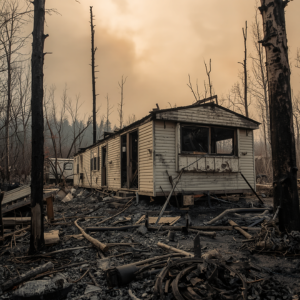
Texas treats mobile homes like vehicles for title purposes, so the certificate of title is your primary ownership document. If the fire destroyed it, apply for a duplicate through the Texas Department of Motor Vehicles.
Beyond that, gather:
- Fire department incident report
- Insurance policy, claim number, and any adjuster reports
- Park approval documentation (most communities require new owner applications)
- Mortgage information and current balance
- Utility service records
- Any previous permits for modifications or additions
- The manufacturer’s data plate details (model number, serial number, manufacturing date, all on a metal plate usually inside the home)
If the mobile home is part of an estate or divorce settlement, you’ll need to provide the appropriate legal documents showing you have the authority to sell. Mobile Home Ninja buys mobile houses for cash. Call us today for a fast and hassle-free offer.
Frequently Asked Questions
How do you price a fire-damaged mobile home?
Most investors calculate from the other direction, taking estimated renovation cost out of projected after-repair value, minus their required profit margin. A home worth $50,000 before fire might land between $15,000 and $25,000 with significant damage, depending on structural integrity and local demand.
What paperwork do you need to sell a mobile home in Texas?
Certificate of title, park approval letter, insurance documentation, fire department report, and any lien release documents. Some communities also require buyer background checks before approving a transfer.
Are there load-bearing walls in mobile homes?
Most mobile homes use steel frame construction. Interior walls are typically non-load-bearing partitions. The exterior walls and main steel frame carry the structural load. Fire damage to the frame or the exterior shell is far more serious than damage to an interior wall.
What’s the hardest month to sell a mobile home?
January and February. Cold weather, holiday aftermath, and fewer active buyers make winter the slowest period. Spring and summer move faster and often bring better prices.
Fire damage is a genuinely bad situation. The insurance process is slow, repairs cost more than estimates, and the traditional real estate market has no real path for you. Cash buyers who specialize in mobile homes exist specifically because of that gap. They can close in two to three weeks and handle the complications that make everything else feel impossible. If you want to understand your options without committing to anything, reaching out costs nothing.
Helpful Texas Blog Articles
- How to Sell a Mobile Home Without Land in Texas
- How to Sell a Mobile Home With a Lien in Texas
- How to Sell a Fire-Damaged Mobile Home in Texas
- How To Sell A Manufactured Home in Texas
- Selling A Mobile Home Privately in Texas
- Mobile Home Bill of Sale Template
- FSBO Mobile Home in Texas
- What Are My Rights as a Mobile Home Owner
- Selling a Mobile Home Without Inspection
- How to Sell an Older Mobile Home in Texas for Top Dollar
- Can You Get a Reverse Mortgage on a Manufactured Home