
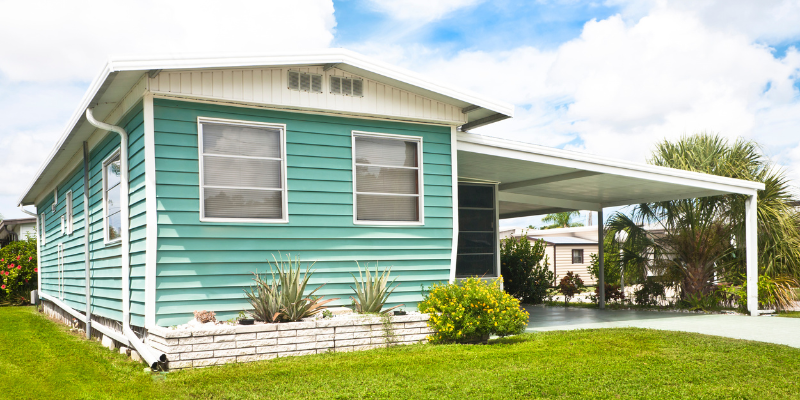
All the Information You Need to Sell Your Texas-manufactured Home
Mobile homes have long offered affordability, flexibility, and a cozy lifestyle. Most Americans dream of having a place to call their home; in fact, it tops having a successful career and starting a family.
Mobile homes make that dream easily accessible, without the high costs and the long construction timelines of traditional houses built from the ground up. Additionally, they’re also an attractive option for retirees looking for a warm retreat to escape the cold winters, or conversely, for those living in warmer climates to get away from the summer heat. But wherever you fall in the spectrum of mobile homeownership, you feel like you’re ready to move on, and you’re thinking of selling.
In this article, we’ll provide you with a detailed, practical roadmap to navigate the selling process for your Texas mobile home efficiently and effectively, and get the most out of the sale. Get a fast, hassle-free cash offer for your mobile home. Contact us today to sell quickly, avoid delays, and move forward with confidence.
What is a Mobile Home?
A mobile home, or manufactured home, is a prefabricated housing unit assembled off-site at a factory, then transported and set up at another location and connected to utilities. A more technical definition is provided by the Texas Manufactured Housing Standards Act, which says that a structure qualifies as a mobile home if it is:
- at least 8 feet wide by 40 feet long,
- leaves the factory on its own chassis,
- can be transported whole or in parts,
- installed on site with or without a permanent foundation,
- and is designed for people to live in.
Under Texas law, these types of homes are under the purview of the Texas Department of Housing and Community Affairs (TDHCA). They monitor compliance among affordable housing providers, ensuring that all units are developed and built in accordance with the Code and HUD standards.
Manufactured homes are typically set up semi-permanently on their own land or on leased land, such as in a trailer park. If it’s the latter, the selling process would be significantly different from a conventional real estate transaction.
Is a Mobile Home Considered Personal or Real Property?
Before reaching out to a broker and formally starting the selling process, you have to know whether your mobile home is classified as personal or real property.
Most manufactured homes are treated as personal property (or chattel, in legal terms), much like a vehicle—especially when they’re located on leased land. In these cases, how much a mobile home is worth is typically determined separately from the land and may decline over time, similar to a car. On the other hand, if you own the land where the home is placed and have legally converted the title, the manufactured home can be classified as real property. This classification can significantly affect how much a mobile home is worth, as it may appreciate more like a traditional site-built home depending on the property’s location, condition, and market demand.
Fortunately, in Texas, you can convert to real property regardless of whether you own the land or not, provided you satisfy certain requirements.
Receive a quick, no-obligation cash offer from Mobile Home Ninja. Whether your mobile home is considered personal or real property, we simplify the process and handle the details for you.
Converting Chattel to Real Property
When a mobile home is considered real property, it offers plenty of benefits:
- Better financing options – access to FHA, USDA, VA loans
- Better tax rates – lower property taxes
- Better resale value – since the value is assessed together with the land it sits on
To be able to convert chattel into real property, you’re going to need the following documents:
- Land deed (if you’re the owner), or a long-term lease, for a minimum of five years
- Lien holder consent – if there’s still a lien on the mobile home, you need consent from the lien holder, and it is filed with the TDHCA along with the Statement of Ownership (SO)
- Application for statement of ownership
- Title commitment – provided by a title company if they are involved in the transaction. It is a legal promise to issue a title insurance policy
Upon receiving conversion approval from the TDHCA, the Statement of Ownership must be recorded at the local county clerk’s office.
Step-by-Step Guide to a Texas Mobile Home Sale

Gather the Paperwork
When selling your Texas mobile home, you’ll need the following documents in hand:
Statement of Ownership (SO)
Your SO, which is filed with TDHCA, must clearly indicate your name as the legal owner and, thus, you have the authority to sell the property. The SO also serves as the home title and contains information such as the home’s make, model, and serial number.
Data Plates
You must locate the data plates (also known as HUD tags or HUD certification labels), which contain the following information:
- United States map showing wind, snow, and roof loads used in the design
- Manufacturer’s name and address
- Serial number, model designation, and manufacturing date
- Applicable statements per HUD requirements
They are typically found inside a kitchen cabinet, a bedroom closet, or beside the electrical panel. Tampered data plates can indicate fraud, so be aware.
Bill of Sale
Preparing a bill of sale is not required in Texas, but it serves as proof of the transaction. It contains the price and other pertinent mobile home details, as well as buyer and seller information. If you’re worried about the format, you can easily download a bill of sale form online.
Lien Release
You must ensure there are no liens on the home before proceeding with the sale. If a lien is present, it must be paid off at closing so a “clean title” can be transferred to the buyer.
Tax Clearance Statement
All property taxes must be paid off before the sale, and a tax clearance statement serves as proof. This document is easily obtainable from the county tax assessor.
Park Approval Letter
If your property is located in a manufactured home community or a trailer park, you’d usually need permission from the community manager before you can sell. Reach out to them and request documentation that explicitly authorizes the sale. Do note that the approval process differs across communities, and they may require you to make some repairs. Or they might want a say in screening potential buyers so the eventual owner fits in seamlessly with the community culture.
Inspection Report
Some buyers require an up-to-date inspection report before they even consider dropping an offer. In Texas, professional inspection services cost between $300 and $500. It’s a worthwhile investment, as it can help you set a better asking price, especially if your mobile home has a clean bill of health. On the other hand, it informs you of the problems you can choose to address or pass on to the buyer via repair credits.
Insurance Records
Your home’s insurance records will help the buyer make an informed decision about whether to proceed with the purchase. If you’ve ever filed a claim for fire or flood damage, robbery, or any other event, it will all be there.
Seller’s Disclosure
Texas law requires sellers to complete a disclosure form before selling. Failure to do so can result in legal liabilities, such as a claim of fraud in the transaction or a breach of contract claim. In other words, it won’t be good for you to hide anything.
Moving Permit
If it will be transported elsewhere after the sale, the buyer will need to secure a DMV permit from the Department of Motor Vehicles.
Repair and Replace as Necessary

With your inspection report in hand, you can proceed in making smart and quick fixes or full-on renovations–if your budget allows, of course. Consider replacing that vinyl skirting with stone or brick. Not only is it more durable, but it also boosts your home’s appearance. Check for any missing or dented siding and replace it if needed. You can also consider upgrading cabinet hardware or replacing old lighting fixtures.
Cliché as it may sound, but first impressions last. A well-maintained property will do wonders in drumming up buyer interest.
Cleaning and Decluttering Can’t Hurt
Clutter can make a home feel smaller, and cluttered manufactured homes, which don’t have much square footage to begin with, can feel really tiny and oppressive. Additionally, trash and foul odors can instantly deter any potential buyer from setting foot on the property.
Before inviting people to viewings, dispose of the junk and clear out personal belongings. Not only would it help highlight your home’s best qualities, but it would also help the buyer envision what it’s like to live in the home that they’re buying.
Understand Your Home’s Value to Set the Asking Price
Secondhand manufactured homes typically sell within the local community. Therefore, pricing it correctly depends on how attuned you are to neighborhood trends and local market conditions. For example, just because a friend sold their mobile home for x amount in another state doesn’t mean yours would be valued the same. Working with a company that buys homes in Dallas and other Texas cities can also give you a quick benchmark for pricing, especially if you’re considering a faster sale.
To establish your home’s market value, you need to do a Comparative Market Analysis (CMA). If you’re working with an agent, they’d typically do this for you. Otherwise, you’d need to do a bit of research yourself. Look up active and sold listings that are similar to yours, also known as comps, from real estate websites such as Zillow, MHVillage, Facebook Marketplace, etc., within a ten-mile radius.
As for setting the price, it would depend on how soon you’d like to sell. If you’d like to sell fast, put it at 3%-5% below the market rate derived from comps. Price it exactly the same or slightly above (up to 10%) if you’re not in a rush. Observe how the market reacts, and if within two weeks you’re not getting a bite, perhaps it’s time to revisit your asking price.
Remember: When selling mobile homes without land and requiring them to be moved elsewhere, they must be priced at 25%-40% below market rate.
Decide Your Sales Method

Real Estate Broker
Selling a mobile or manufactured home involves many moving parts. You can easily feel overwhelmed by all the paperwork, so you might consider getting a real estate broker to do the heavy lifting for you. And who wouldn’t want to have someone else to take on the hassle of negotiations, marketing, showings, and closing? All you have to do is accept the buyer’s offer, sign on the dotted line, and the money from the sale will be in your bank account.
The tradeoff? You’ll have to share the profit via commissions. You also have to pay for the closing costs. All told, expect to get around 90% of the proceeds, which may or may not be subject to capital gains taxes, depending on how long you’ve owned the home and its appreciation in value.
For Sale by Owner (FSBO)
If going with a broker is not for you, you can take the reins in your home sale by going the FSBO route. It’s not unpopular among mobile home owners; in fact, 16% of all FSBO transactions are for manufactured homes.
With an FSBO, you don’t need to pay commissions at the end. You’re also in charge of the whole process, which means you get to choose:
- How much to sell it for
- What improvements to make
- How to stage and market it
- When to do the showings
- Who do you sell it to
For people who like maintaining control and flexibility over the sale, this path is for you. Furthermore, as the owner, no one else is better positioned to answer buyer questions about the house than you.
The drawback? You’ll have to do a lot to sell it. And since not all of us are born salespeople, trying to sell your home on your own comes with a steep learning curve, such as:
- Setting a competitive listing price – this requires intensive research
- Navigating seller disclosures – Failure to do so correctly can spell legal trouble down the line
- Figuring out an effective marketing strategy
- Being a charismatic host in your showings – if you’re shy, you might struggle with this
- Negotiating effectively – you might agree to concessions that you might not be ready to give, or push back too hard, so that your buyer is turned away
If that sounds like a lot, you might be wishing for an alternative. Fortunately, there is! Read on.
Cash Buyer
Selling to a cash buyer, such as real estate investors, house flippers, and “we buy houses” companies, presents a lot of benefits:
- You can sell your house as is – no need to repair, renovate, or clean out junk
- You don’t have to schedule an inspection
- You got a sure sale – cash buyers don’t depend on lenders, as they have cash that they’re ready to spend at a moment’s notice, so there’s zero risk of transactions falling through
- You can choose the closing date – since they have cash available anytime, they work on your timeline and won’t be waiting around for loan approvals
- You don’t have to pay commissions – there’s no middleman taking a bite out of the profit, which means you get everything that’s on offer
Sounds too good to be true, what’s the catch? Texas cash buyers operate on the maxim that “money is made when you buy, not when you sell,” so they aim to purchase properties at the lowest possible price to maximize their return later. Expect to sell below market value, but don’t see it as a loss. With the speed and convenience of selling to Texas cash buyers, you may still come out ahead overall.
Close the Sale
Once the sales agreement is signed and money changes hands, a new Statement of Ownership must be filed with TDHCA. An application for a new SO costs $55, and this officially transfers ownership to the buyer.
Frequently Asked Questions: Selling a Texas Mobile Home
Can I Sell Without Converting to Real Property?
Yes, absolutely. The only real difference is that it is sold as personal property, like a car, and thus can have a lower resale value due to depreciation. Additionally, your buyer may have difficulty securing financing, as many loans require real property as collateral. If they do manage to finance it, they might face higher interest rates.
Should I Sell With or Without the Land It Is Attached to?
Without Land
On top of the drawbacks mentioned above, if it’s sold on its own and needs to be moved, buyers may be deterred by the hassle and costs involved. Furthermore, home insurance companies typically won’t insure a manufactured home after it has been moved twice.
With Land
It is considered real property, with its own title. Land appreciation can provide a buffer to the depreciation of the mobile/manufactured home. And since it is titled as real estate, banks and mortgage companies are more open to providing loans, and your buyers will have access to a myriad of financing options.
When Do I Need a New Statement of Ownership (SO)?
When you transfer ownership, such as when buying or selling, a new SO is required. However, there are still other scenarios that call for this, such as when:
- Changing the use from residential to commercial and vice versa
- Converting from personal to real property and vice versa
- Moving the mobile home to a different location
- Transferring property to the heirs upon the death of the owner
Closing Thoughts: Paperwork Needed in Selling a Texas Manufactured Home
Selling a Texas mobile home requires a ton of preparation and knowledge about the legal, financial, and documentation requirements. And here at Mobile Home Ninja, we’re here to guide you the rest of the way. Forget about inspections, repairs, and the uncertainty and waiting when you list on the open market. Just fill in our form with your mobile home address, email, and phone number, and you’ve got a sure buyer lined up for you! You’re guaranteed a fair, no-obligation cash offer, and if it’s acceptable to you, go ahead and choose your closing date! You can reach us at (469) 253-7222 to see how easy and quick it is to sell your mobile home for cash!
Helpful Texas Blog Articles
- How to Sell a Mobile Home Without Land in Texas
- How to Sell a Double-Wide Mobile Home in Texas
- Selling A Mobile Home That Needs Repairs in Texas
- What Taxes Do You Pay When Selling A Mobile Home in Texas?
- Paperwork Needed To Sell A Mobile Home In Texas
- Selling An Inherited Mobile Home In Texas
- How Much Is My Mobile Home Worth in Texas
- How To Sell Your Mobile Home In A Texas Trailer Park
- How to Transfer a Mobile Home Title After the Owner Dies in Texas
- How to Sell a Mobile Home During a Divorce in Texas