
How to Sell an Inherited Mobile Home in Texas
Your dearly departed loved one can leave you various things as inheritance: bank accounts, stocks, bonds, paintings, and, of course, real estate, including mobile or manufactured homes. There’s no estate planning; all these assets may have to go through a legal proceeding called probate. Yes, heirs can sell inherited property, but dealing with probate can be tricky. It’s not as straightforward as a regular home sale, as there are specific legal requirements, such as paperwork needed to file, deadlines to comply with, and court hearings that you may have to attend.
It’s easy to feel overwhelmed with all of this, especially in light of what just happened.
In this article, we’ll provide you with a good grasp of the process of selling an inherited Texas-manufactured home, your available options, and possible roadblocks that you might encounter, so you can anticipate and navigate around them.
Mobile Home Ninja makes fast, fair cash offers for inherited mobile homes, helping you avoid probate delays and move forward quickly with a simple, hassle-free sale.
What is a Mobile Home?
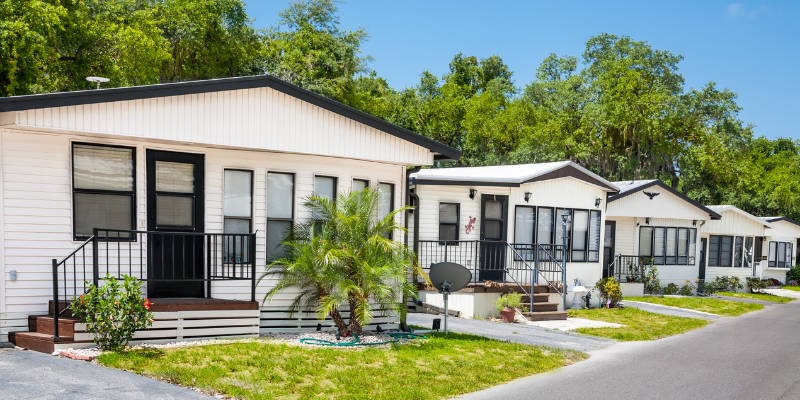
A mobile home, or a manufactured home, is a housing unit that is entirely pre-fabricated and moved to the site–beams, columns, floors, roof, and all. Once set up, it is connected to utilities and typically stays in place for years. In this sense, it is not literally mobile, but its mobile capabilities can be easily activated as needed.
Under Texas law, mobile houses are regulated by the Texas Department of Housing and Community Affairs (TDHCA), which maintains ownership, lien, and classification records. A key difference between mobile homes and on-site-built conventional homes is that, instead of a title, a Statement of Ownership filed with the TDHCA serves as proof of ownership. Generally, mobile homes are considered personal property until they are permanently attached to the land and registered to the TDHCA as real property through an ownership application.
Aside from this key difference, buying and selling mobile homes follows much of the same procedure as a conventional home sale.
However, if you throw inheritance and probate in the mix, that’s when complications arise.
Understanding Transfer of Ownership and Navigating the Texas Probate Process
Unless your deceased relative had an estate plan in place to explicitly avoid it, all of their assets must undergo probate. Probate is a court-supervised legal process wherein someone’s real properties and other assets are collected, reviewed, and ultimately distributed after death. It ensures that a person’s Will is valid and that all outstanding debts are paid off before what remains of the estate is given away to their intended heirs. In case there’s not enough liquidity to cover debts, the probate court may order an estate sale to liquidate the assets and pay off creditors.
In Texas, several probate methods are available. You can opt for a formal probate, especially if the estate is complex and worth millions of dollars, or you can go for informal methods for a straightforward resolution. We’ll give you a rundown of each so you can see what’s best for your situation.
Formal Method: Estate Administration
In Texas, the formal probate process is known as estate administration. It is long and costly, with legal fees hovering between 1% to 7% of the estate’s value. Therefore, for an estate valued at $1,000,000, probate could cost $70,000. This is ultimately paid for by the decedent’s estate, but it’s still a huge chunk of money. Alternatively, you can negotiate for a flat fee with lawyers, especially if your probate case is straightforward and uncontested.
Estate administration has four (4) phases: pre-petition, appointment, administration, and closing, and here’s what happens in each of them.
Pre-petition Phase: File the paperwork
Prepare all the relevant documents: the Will, death certificate, and probate petition form, and file them in the county court of your deceased relative’s residence.
Appointment Phase: Executor is assigned
Once the documents are received, the probate court formally starts the probate process by appointing an executor. The executor, or estate administrator, is usually a family member named in the will or a neutral third party. They will be the ones responsible for managing the proceedings.
Administration Phase: Heirs, beneficiaries, and creditors are notified

In this phase, the executor sends a notice to all creditors, heirs, and other individuals with a financial interest in the estate that the estate is in probate.
Afterward, assets that form part of the probate estate are identified. These assets are bank accounts, bonds, stocks, luxury collections, and real property–yes, even mobile homes. Debts and liabilities are also taken into account and then paid off. Sometimes, probate property is liquidated to cover debts.
Once this phase is completed, probate enters its closing phase.
Closing Phase: Assets are distributed
After the decedent’s debts have been settled, the executor will also pay off the court and attorney fees, as well as taxes from the estate. Finally, all the remaining assets and funds will be distributed among heirs and beneficiaries.
Informal Methods
A formal probate can be tedious, often taking months to resolve, and can be taxing and overwhelming for the family left behind. Fortunately, Texas has the following informal probate methods that deliver a speedy resolution–provided certain criteria are satisfied, especially when working with a cash for houses company in Fort Worth and surrounding cities in Texas to simplify the selling process.
Muniment of Title
This is an action unique to Texas that allows a deceased family member’s property to be quickly and directly transferred to you without going through probate. It only requires that the real estate property wasn’t used to secure debts aside from the mortgage, and you’ll need a lawyer to file this in court.
Small Estate Affidavit
For estates valued at $75,000 or less and without a Will, Texas allows the estate to be transferred to the heirs through a small estate affidavit. This is a legal process and must be filed with your local county court.
Determination of Heirship
This is another proceeding in case there’s no valid Will to uphold, in which the court steps in to determine who the heirs are. Further to this, the court also decides whether a formal estate administration is needed, and if not, the heirs can proceed to collect the decedent’s assets.
Affidavit of Heirship
In the absence of a Will, the affidavit of heirship can be used to establish ownership. It is a sworn statement provided by someone familiar with the deceased and who their heirs should be, and filed with the county recorder. Buyers and home title companies often accept this as proof of ownership, though it comes with caveats for buyers, as courts don’t validate the information it contains.
Administration of Community Property
If you’re the surviving spouse, the estate automatically transfers to you without having to undergo probate. You can then sell off inherited assets, service community debts, and pay property taxes.
Family Settlement
Sometimes, heirs don’t agree on how to distribute the property, and it would seem like litigation is the only way. Not only is it costly, but it could also irrevocably damage relationships. Fortunately, there’s still an alternative path: the path of mediation. A neutral third party can help cool tensions among emotionally charged family members and guide them toward productive negotiations.
Order of No Administration
An order of no administration is a simplified Texas probate alternative when the probate estate isn’t sufficient to cover the debts and living expenses of the surviving family members for one year. In this, the court determines that the family’s living allowance takes priority and therefore prevents creditors from pursuing the remaining assets.
Options After Completing Probate in Texas

After probate is completed, you find yourself the brand-new owner of a manufactured home. Now what? Well, you can either keep it or live in it, rent it out, or sell it.
Keep
An overwhelming number (85%) of Americans dream of having their own home, even placing it above having a successful career or raising a family, and maybe you’re one of them. You can certainly consider keeping it and living in it, especially if it holds lots of fond family memories. Doing so can give you time to save up for an upgrade or wait to sell later, especially if the market isn’t going your way.
Rent
If your housing is already secured, renting out inherited property can be a good source of passive income; or if the prefab home has a mortgage, rent income can be used to pay it off, so you end up with a fully-paid property later on. However, you must be aware of the financial aspects of managing a rental, such as:
- Keeping it well-maintained and habitable. If repairs and renovations are needed, it will have to come out of your pocket.
- Rental income is part of your taxable income. Sometimes it might just push you over the edge into the next bracket, resulting in a net loss.
- Getting landlord’s insurance in order to stay protected in case of costly property damage.
Sell
Once you’re the owner, navigating the property selling process is very similar to selling a house that you acquired yourself. There are the usual things to take care of before reaching out to a listing agent, such as checking and removing liens, cleaning out personal belongings, and obtaining a tax clearance, but there’s a unique step when dealing with a mobile home: locating the data plate or HUD tag. It can be found inside a kitchen cabinet, closet, or the electrical panel, and contains the following:
- a map of the US showing the wind, snow, and roof loads used in the design;
- name and address of the manufacturer;
- serial numbers and unit designation; and
- certification statements.
Additionally, in selling an inherited mobile home in Texas, the tax situation can be a little complex. More on this below.
Tax Implications of Selling an Inherited Manufactured Home

In the United States, the IRS treats your mobile home as a primary residence if the following applies:
- It has cooking, sleeping, and bathroom areas
- Legally classified as real property through a THDCA filing
- You own and live in it for most of the year, and it is the address that appears on your identification cards and tax returns
Knowing whether it qualifies as your primary residence is important, as it has the greatest impact on your taxes.
Fair Market Value and the Tax Basis of Inherited Real Property
If you were to sell your home in the open market, the price at which it would sell is considered the fair market value (FMV). On the other hand, the tax basis is how much the property cost you when you got it. As this is an inheritance, the tax basis is equal to the FMV during the time of its original owner’s death–and not how much they paid for it when they acquired it.
For example, the original owner purchased it (and the land it sits on) for $100,000 a decade ago, and it’s worth $150,000 at the time of their death (mainly due to land appreciation). Your tax basis would be $150,000, not $100,000, after the ownership is transferred to you.
But let’s consider another scenario: you were given the house while the original owner is still alive. And then, a few days later, they pass away. What happens to your tax basis? In this case, as long as the title or statement of ownership is transferred to you before their death, you also inherit their tax basis. In the previous example, your tax basis would be $100,000.
The basis must be accurately determined, as it greatly affects the capital gains taxes you need to pay.
Contact us today to receive a fast cash offer for your home, no repairs, no delays, and no hassle. We make the process simple so you can sell quickly with confidence.
Capital Gains Tax
According to the IRS, when selling property for a price higher than its tax basis, the difference is considered capital gain (or loss), and you have to pay taxes on it.
For example, when selling inherited property for $200,000 on a $150,000 tax basis, the “profit” of $50,000 will be taxed. The rate depends on how long you held the property prior to the sale.
- Short-term Capital Gains: If you sell the home within 1 year of receiving it, you’d be subject to short-term capital gains tax. The rate will depend on your income tax bracket, so you’ll have to pay up to 37% of the $50,000.
- Long-term Capital Gains: If you wait a bit before selling, long-term capital gains tax rates would apply. This is between 0% and 20%, so you may not be taxed on the profit you may get from the transaction.
Can You Minimize Tax Hit When Selling Property That You Inherited?
Capital gains tax can significantly eat into the proceeds from your mobile home sale. So you wonder if there’s a way to lessen the blow on your wallet and keep more of the money.
The good news is: yes, you can absolutely avoid capital gains taxes on inherited property! In fact, you can shield up to $250,000 of your capital gain when you file your tax return as a single individual, and up to $500,000 when filing jointly with your spouse! And it all hinges on meeting the residence, ownership, and lookback requirements.
- Residence: It must be considered your primary residence.
- Ownership: You must own it for at least 2 years.
- Lookback: You must not have claimed the tax break in the 2 years prior to claiming it now.
If you’re not able to meet all of the requirements, you can still claim a partial exclusion of capital gains. Say you want to sell six months after inheriting the home, you’ll be able to claim a 25% partial exclusion. Since you’re selling before 1 year is up, short-term capital gains tax rates will apply.
Ways to Sell Inherited Property in Texas
When selling property, you have to choose between two things: selling for top dollar or selling really fast. Still, both can happen, especially if you’re in a red-hot seller’s market, but for the purposes of this article, let’s only consider either scenario.
Selling for Top Dollar is the Priority
If the house is in good working order, and local market conditions are favorable, you’d want to reach the largest pool of buyers. To market your inherited home effectively, reach out to real estate agents. They’ll take care of everything, from staging to closing, insulating you from the hassles and stresses of the home-selling process. They’ll also be able to accurately price your home so it won’t languish in the market unsold.
However, you have to keep in mind that this convenience comes at a price–specifically up to 6% of the sale price–as their commission. Add in cleaning, staging, holding, and other associated costs, and it can be pretty significant.
Selling Fast is the Priority
What if we tell you that it’s possible to sell your inherited manufactured house within a week? The answer is a resounding YES! Cash buyers, such as real estate investors, flippers, and cash-buying companies, including investor house buyers in Texas, are constantly on the lookout for encumbered properties, including those in probate.
When you sell to this type of buyer, a transactions is nearly 100% guaranteed since money is readily available. They also buy properties as is, so you don’t have to fix anything up. And the biggest bonus when working with cash buyers is dealing directly with them. There’s no need for a middleman who’ll have to share in the profits–no commissions, and no hidden fees.
All of these sound good, so what’s the catch?
Since your property will be sold as-is, expect it to sell at a below-market price. Still, it’s a small price to pay for a quick and straightforward transaction.
Final Thoughts: Selling an Inherited Texas Mobile Home
If your deceased family member didn’t have an estate plan, the property may have spent some time in probate before it’s handed to you, so it’s understandable that you’d want to sell quickly. Here at Mobile Home Ninja, we buy mobile or manufactured homes fast, and for cash! We’re familiar with the local Dallas market, so you’d get an offer that reflects real-time market dynamics. More importantly, we buy as is, so no need to clear out the junk!
Just fill in our form with your phone, email, and your mobile home address, whether it’s on a private lot or in a park, and you’re good to go! You’ll receive our fair and free cash offer–no obligation, no strings attached! We also close on the date you choose. If you’ve got any questions, feel free to reach out at (469) 253-7222, and we’d love to tell you more about our mobile home buying process.
Helpful Texas Blog Articles
- How to Sell a Mobile Home Without Land in Texas
- How to Sell a Double-Wide Mobile Home in Texas
- Selling A Mobile Home That Needs Repairs in Texas
- What Taxes Do You Pay When Selling A Mobile Home in Texas?
- Paperwork Needed To Sell A Mobile Home In Texas
- Selling An Inherited Mobile Home In Texas
- How Much Is My Mobile Home Worth in Texas
- How To Sell Your Mobile Home In A Texas Trailer Park
- How to Transfer a Mobile Home Title After the Owner Dies in Texas
- How to Sell a Mobile Home During a Divorce in Texas